Clearing a desert lot in Scottsdale isn't just brush removal. The city protects major native plants citywide, the ESL overlay keeps part of many lots natural for good, and Maricopa County regulates the dust.
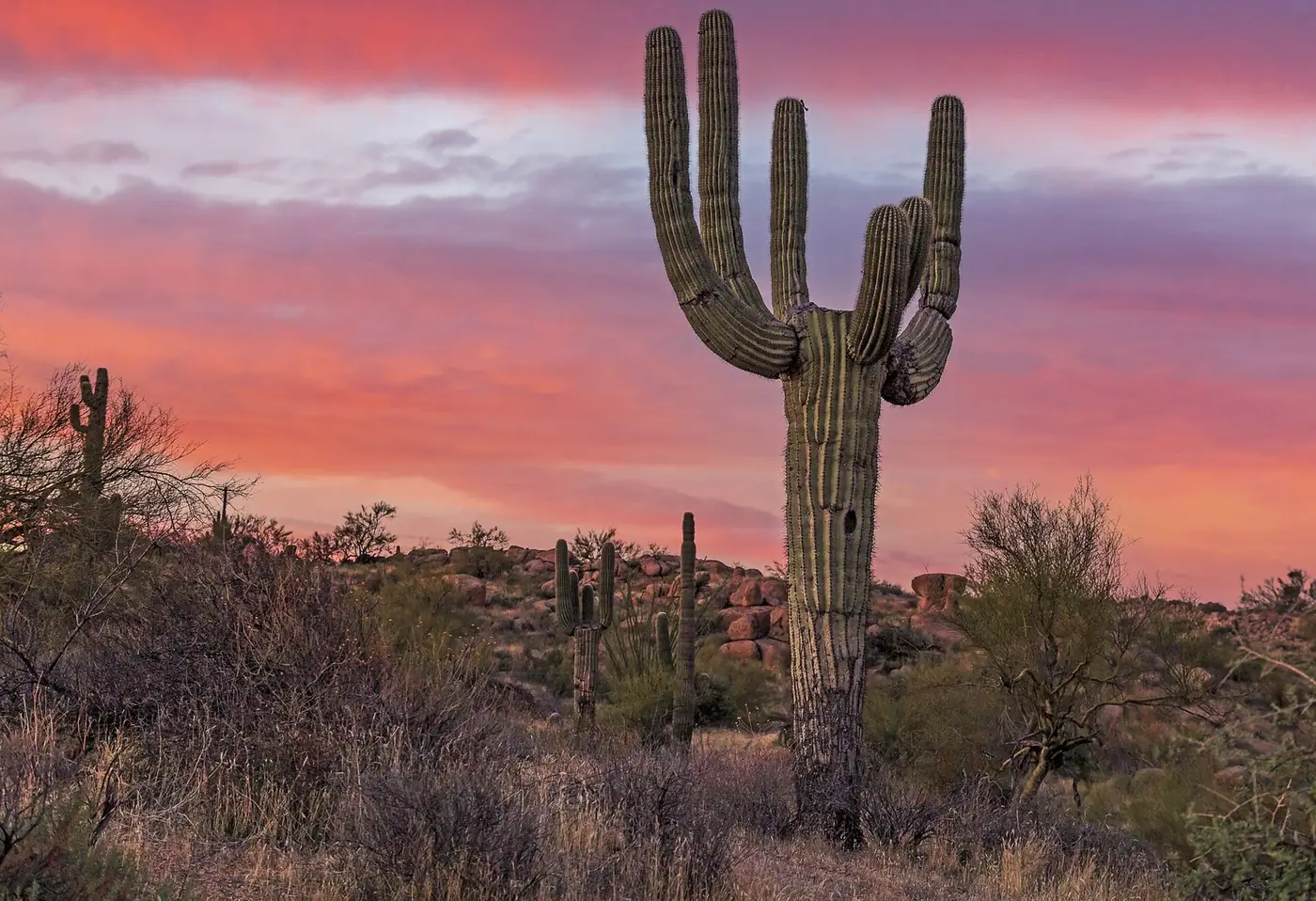
Scottsdale's Native Plant Ordinance
City Code Chapter 46, Article V applies to the whole city, in natural desert and landscaped areas alike. From the city's program page:
- Removing, relocating or destroying a protected plant needs a native plant permit, and permits are only issued with an approved or proposed development project.
- Single-family projects submit a native plant inventory report and site plan with their building plan review submittals.
- Plants should stay in place where possible. Those that have to move are salvaged and replanted within the project, unless poor health or orientation makes that impossible.
- A pre-site inspection (#42) comes before salvage begins, with the stamped, approved program on hand. After salvage, the nursery site is inspected, and if more than 20 percent of plants are lost, the salvage contractor explains why in writing.
The state's notice rule
Arizona's native plant statute adds a state step for clearing protected plants on private land: notice to the Arizona Department of Agriculture 20 days ahead for under an acre, 30 days for 1 to 40 acres, and 60 days for 40 acres or more. It exempts individually owned residential property of 10 acres or less where the first construction has already happened.
What stays natural
On ESL lots, Natural Area Open Space is permanent. The city's guide says routine raking, pruning or thinning isn't allowed there, though minimal clearing of fire-prone annual growth within 30 feet of an occupied building may be accepted. See ESL desert lots for how much of a lot that is.
Dust
Maricopa County requires a dust control permit for activities disturbing 0.10 acre (4,356 square feet) or more, and Rule 310 applies to every dust-generating job.
Cost
Angi's national excavation guide lists land clearing at $1,400 to $5,800, and removing large rocks and trees at $40 to $100 per cubic foot. Plant salvage, the inventory report and boxing large specimens are separate items to ask about.
Sources
- City of Scottsdale: Native Plant program (City Code Chapter 46, Article V)
- Arizona Revised Statutes 3-904: Destruction of protected native plants by private landowners (via FindLaw)
- City of Scottsdale: Citizen's Guide to the Environmentally Sensitive Lands Ordinance (June 2004)
- Maricopa County Air Quality: Dust Sources, Control, and Training
- Angi: How much does excavation cost? (Mariel Loveland, updated September 14, 2026)
Reviewed October 20, 2026. Rules, prices and contacts change, so check the source before relying on it.
Questions and answers
Do I need a permit to remove native plants in Scottsdale?
Yes, for protected plants. Scottsdale requires a native plant permit to remove, relocate or destroy one, issued only with a development project. Single-family projects submit a native plant inventory with building plans.
What does desert lot clearing cost?
Angi's 2026 national guide lists land clearing at $1,400 to $5,800. Native plant salvage and inventory work is usually priced separately.
Get your lot clearing quoted
Call or use the form. A local excavation contractor gets back to you, and asking for a quote costs nothing.
Reached voicemail? Leave your name, number, the address and a line about the job.